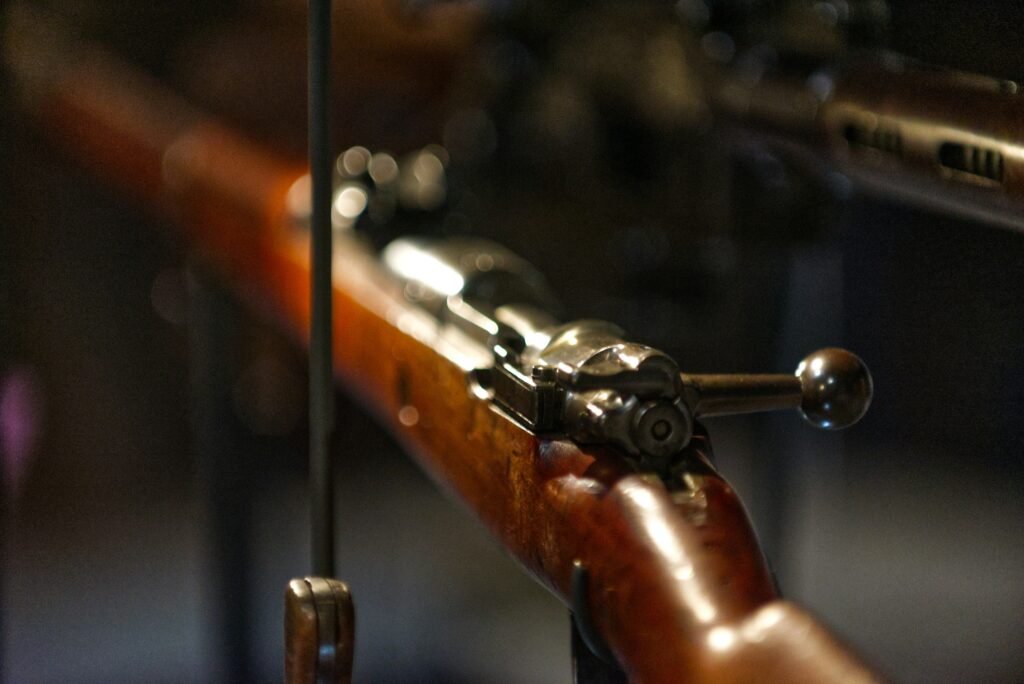
I still remember the whine of that old shop light.
Cold concrete under bare feet.
Walnut dust curling in the beam like campfire smoke.
That night I stripped a cloudy rifle stock and saw fresh grain burst alivebold streaks the color of coffee and cherry. My heart kicked. Your heart will do the same. This guide hands you every move I use at the bench. Pick it up, test it, then step back and smile when your wood glows.
Why This Craft Matters
- A sound stock guards accuracy.
- Fresh finish blocks rain, sweat, and mud.
- Sharp lines lift resale.
- Clean wood feels good in the palm.
So yes, gunstock refinishing is work, yet the payoff shows up every time you shoulder the piece.
Safety First, Always
- Clear the firearm twice then once more just for calm.
- Move ammo to another room.
- Strap on eye shields and a respirator when solvents come out.
- Vent the space. Fans help.
- Gloves save skin.
Safety keeps fingers and lungs happy so the project stays fun.
Gear That Makes Life Easy
Strip and Prep
- Card scraper with a sharp hook
- Citrus-based stripper in a metal can
- Nylon brushes and old toothbrushes
- Dawn soap for grease break-up
- Mineral spirits for final wipe
Sand and Shape
- Cork sanding block
- Dowel rods for curves
- Grits: 120, 150, 180, 220, 320, 400, 600, 1000, 2000
- Micro finishing paper for last nibs
Color and Fill
- Water stain from Birchwood Casey
- Alcohol leather dye from Fiebings
- Birchwood Casey sealer and filler
- Pumice and rottenstone for classic pore work
Finish Options
- Birchwood Casey Tru-Oil liquid and aerosol
- Pure tung oil for slow depth
- Boiled linseed oil for service wood
- Wipe-on varnish for rough field duty
Rub Out and Polish
- Auto rubbing compound
- Rottenstone plus mineral oil
- Cotton flannel strips
A tidy bench with these items means less panic, more flow.
Judge the Wood Before You Touch It
Stand in bright light. Take a slow spin of the stock.
- Cracks across the wrist spell trouble.
- Missing chunks at the head kill structural trust.
- Checkering loaded with gunk may need a pro.
- Heavy warping ruins fit.
If the piece is a museum queen pass it on. Ordinary hunters, plinkers, and heirlooms with plain scars are prime students for your hands.
Plan Your Finish
- Field shotgun that swims through cattailspick a thin urethane skin topped with wax.
- Classic deer rifle that rests in a safehand rubbed Tru-Oil in satin feels right.
- Military surplus that tells historyboiled linseed oil keeps the vibe.
Know the mission before the first scrape. This choice guides every later step and saves time.
Disassembly Done Right
- Grab hollow-ground bits that fill screw slots.
- Bag parts in snack zips and mark each bag with a sharpie.
- Snap phone pics as insurance.
- Park metal away from paint stripper.
Clear bench, clear mind.
Strip Old Finish Without Drama
Scraper Pass
Hold the card scraper square, pull long strokes, listen for a soft hiss. Flakes fall like chocolate curls.
Chemical Pass
Brush citrus stripper and wait per label. Foam will lift yellow goop. Swab with paper towels. Rinse in warm soapy water, then let the stock stand on scrap sticks to dry.
Smell fades, wood breathes.
Oil and GreaseOut You Go
Hot Water Trick
Prop the stock in a deep sink. Pour near-boiling water while brushing degreaser. Brown film runs off in streaks. Rinse until clear.
Paper Towel Draw
Wrap the wrist in towels soaked with acetone, cover with foil, walk away for an hour. Swap towels until they stay clean. Air dry overnight.
Clean pores accept stain and finish with no fish-eyes later.
Steam Dents Back to Level
Lay a wet cotton rag on each dent. Touch a hot iron for three seconds. Steam pops fibers up like magic. Cool, then let the wood dry. Nearly flat already.
Crack and Chip Repair
- Wick thin cyanoacrylate into hairline splits. Clamp with rubber bands.
- Blend slow epoxy and sanding dust for bigger gaps. Pack tight with a toothpick. Clamp mild, wipe squeeze-out with alcohol.
Limit glue creep; fine lines vanish under finish.
SandingSlow Dance With Grain
- Block on flats, dowel on curves.
- Stay with the grain.
- Change paper when dull.
- Skip no grit.
Usual path: 120 150 180 220 320 stop at 400. Damp cloth raises grain before 320 then a light pass knocks fuzz off. Lines stay sharp and proud.
Color: Subtle or Bold
Walnut
Often lovely with no stain. A mix of medium brown dye plus a kiss of red gives rich vintage tone.
Maple
Blotch city, so lay a pre-stain conditioner. Water dye wakes curl to life.
Birch or Beech
Gel stain helps even color. Test on scrap first.
Laminate
Let clear oil shine through; dyes run wild fast.
Stain workflow:
- Wipe stain evenly with lint-free pad.
- Wait.
- Buff off extra with a dry cloth.
- Rest overnight.
A smooth canvas waits for filler.
Fill Those Pores
Tru-Oil Slurry
Rub a thin coat of Tru-Oil then wet sand with 400. Mud fills pores. Wipe across grain. Dry 24 hours. Repeat until pores sit flush.
Sealer and Filler
Brush a single film of commercial filler. Dry then sand until only specks remain in holes.
Pumice and Oil
Sprinkle pumice, drip mineral oil, rub with felt. Paste turns gray, which signals pore pack. Rottenstone polishes finer.
Pick a Finish
Tru-Oil, The Crowd Favorite
- Finger application keeps coats paper thin.
- Repairs blend.
- Water beads roll off once cured.
Tung Oil Base Plus Tru-Oil Top
- Two deep tung flood coats create warmth.
- Follow with Tru-Oil layers for sheen.
Boiled Linseed Oil
- Historical vibe on service rifles.
- Needs patience and many micro coats.
Wipe-On Varnish
- Tough film for duck blinds and brush guns.
- Touch up needs sanding but worth it for harsh duty.
Spray Poly From a Pro Gun Shop
- Piano gloss.
- Requires booth and gear.
Choose the feel you crave. Then lock in and stay the course.
Apply Like a Pro
Warm the bottle in your pocket. Three drops on fingertips, wipe from butt to muzzle end in one glide. Hang the stock. Light coats dry in twelve hours under good air.
Dust nibs? Scuff with 1000 grit then move on.
Average satin job uses four to six coats. Mirror gloss can push to ten or twelve. Do not rush. Wood hides no secrets and time beats force.
Environment Rules the Cure
Keep room temp near seventy, humidity under sixty. Close doors when sanding ends, settle dust. A cheap plastic drying tent blocks swirling debris.
Troubleshooting Cheatsheet
- Fish-eyes show oil still hides inside. Wipe mineral spirits, wait, seal thin.
- Cloudy layer points to early sanding. Give longer cure, buff with palm plus a drop of oil.
- Runs scream heavy hand. Let tack for an hour, slice run with razor, feather sand, coat again thin.
- Sticky feel signals damp air. Add gentle heat or wait a full day.
Patience solves most crises.
Time and Money Reality
DIY Supply Cost
| Item | Price Range |
| —— | ————- |
| Stripper | $15-25 |
| Sandpaper pack | $20-35 |
| Degreaser | $8-15 |
| Stain or dye | $10-20 |
| Tru-Oil | $10-15 |
| Polishing goods | $8-15 |
| Paste wax | $8-15 |
Plan on eighty to one-thirty dollars for gear that finishes several stocks.
Labor Clock
- Strip and degrease: two hours total plus overnight dry.
- Sand: three hours spread over an afternoon.
- Finish coats: ten minutes each, spaced by sleep.
- Final rub out: one lazy hour with good tunes.
A week of evenings births a fresh beauty.
DIY or Hire Out
Pros charge three-hundred to six-hundred for a field refinish. Deep gloss show work climbs higher. Your sweat saves cash and teaches skill that spills into every other wood task.
Step-By-Step Snapshot
- Check clear gun, bag ammo.
- Disassemble, photo every step.
- Scrape old finish.
- Strip chemical residue, rinse.
- Degrease with hot water, dry.
- Steam dents.
- Sand through 400.
- Stain if desired, rest overnight.
- Fill pores.
- Lay thin finish coats, scuff between.
- Cure one week, polish to chosen sheen.
- Wax, reassemble, test function.
Hang the rifle on the wall or hit the range on Saturday.
Wood Species Quick Guide
- Black walnut loves Tru-Oil, needs filler.
- English walnut finer pores, dyes accept well.
- Maple shows figure after dye, seal first.
- Birch/Beech want gel stain and filler, keep coats lean.
- Laminate pops under clear oil or wipe-on varnish.
Frequently Asked Questions
- How much will this project cost me?
Supplies land around one-hundred bucks and cover more than one stock.
- Which finish stands tall for rifles?
Tru-Oil blends protection, beauty, and easy repair.
- Can I refinish at home?
Yes, a small garage works fine with decent light and airflow.
- Will a refinish drop collector value?
Quality work on working guns helps look and use. Rare antiques deserve a specialist.
- How many coats should I plan?
Four to six for satin, eight to twelve for glassy shine.
- How long between coats?
Twelve to twenty-four hours keeps cure safe.
- Do I seal hidden wood?
Yes, brush a thin film inside inletting and screw holes.
- Power sander yes or no?
Hand sanding rules. Machines round edges fast.
- Checkering packed with crud?
Citrus stripper plus nylon brush, then toothpick picks out sludge.
My Proven Five-Day Tru-Oil Schedule
- Day One
Strip, degrease, dry under fan.
- Day Two
Sand to 400, raise grain, first coat, dry.
- Day Three
Gray pad scuff, second coat, dry.
- Day Four
Wet sand slurry, dry.
- Day Five
Fine pad, third coat, decide on gloss path.
Add coats until happy, then wait a week before final polish.
A Bench Story
A neighbor dropped off a beaten duck gun. Finish flaked like dried mud. We scraped, washed, pulled oil until towels stayed white. He wanted warm brown. Water stain over walnut gave chocolate depth. Six feather-light Tru-Oil coats later the wood looked alive. Months passed. He sent a photo from marsh grass. Drake in hand, grin wide. Wood still shone. Memories sealed under that tidy film.
Tactile Joy
Run fingers across fresh finish. Feel silk, hear faint hiss. Smell linseed mixing with autumn air. Sight and touch merge.
- Gunstock refinishing is therapy in solid form. You guide raw grain to final glow. Then you carry it outside and breathe cold dawn while geese lift off. The stock warms under your palm. Pride hums.
Final Thoughts
Start slow. Trust each grit and each coat. Listen to wood under the scraper. Drop by drop you create a surface that speaks.
Send me a snapshot when your rifle rests gleaming on the bench. I will raise my coffee mug in salute.
Ready? Lights on. Gloves up. Wood waits.