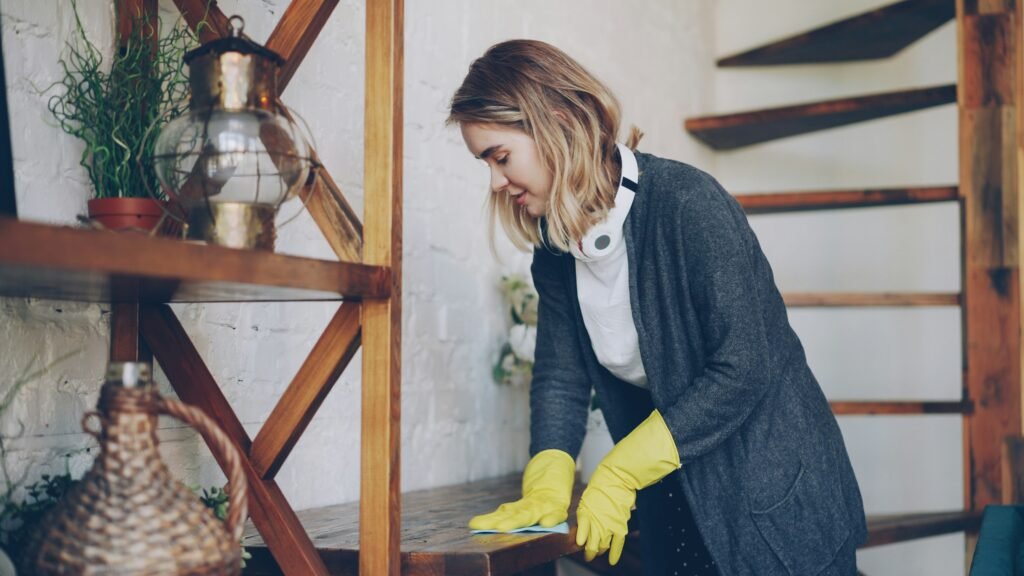
A maple dresser once sat in the corner of my shop; spring sun lit its grain; everything looked fine until the drawers slid out. Handles held an oily film. A musty note drifted up. I pictured that piece in a nursery, so it had to feel safe. The journey that followed shaped this guide. You get every tip I used. You save hours of trial. You guard each plank of wood the easy way.
One-Minute Answer for Busy Hands
- Dust with a dry microfiber cloth
- Wipe with a wood-safe disinfectant
- Keep each spot wet for the listed dwell time
- Rinse with a damp cloth before any haze forms
- Dry at once and finish with wax or oil
Follow those five moves and you get a fresh surface that still looks like wood. Fast and simple.
Why This Task Gets Tricky
Wood drinks liquid. Finishes slow that drink. Some finishes form thick armor; think polyurethane or varnish. Others sink in; think tung oil or Danish oil. Shellac and lacquer form thin shells that melt when alcohol hits them. One wrong chemical or one long soak can fog the gloss. That is why product choice and timing matter. You pick safe cleaners. You use a light touch. You rinse before a film forms. You seal again for future ease.
Spot the Finish in Under Two Minutes
Use three quick tests in a hidden area. No lab gear needed.
- Water bead test: Drip a tiny splash; if it stays round, the surface carries a film finish.
- Alcohol swab test: Dab isopropyl alcohol with a cotton tip; shellac goes sticky fast.
- Touch test: Rub a finger; an oil finish feels silky and shows a faint dark patch that fades as it dries.
Keep notes on every piece you own. That record saves headaches later.
Tools and Supplies That Love Wood
You gain speed and safety when the right gear sits within reach.
- Six clean microfiber cloths
- Soft detail brush for carvings
- Spray bottle for custom mixes
- Fresh water in a bowl
- Paste wax or a light conditioner
- Gloves and eye shield
- Phone timer
- Mask for bleach days
My house rule: use two cloths per step; one holds cleaner; one follows with water.
Four-Step Method That Works Every Time
Step 1: Dry Dust
Wipe with the grain. Hit edges, rails, backs, drawer sides. Slide a brush into carvings. Dry dust stops grit from scratching later.
Step 2: Apply Disinfectant
Pick a solution from the safe list below. Mix to label ratio. Wet your cloth; wring until it stops dripping. Cover small zones. Keep the patch evenly damp until time is up.
Step 3: Rinse
Use fresh water on a clean cloth. Lift every trace of cleaner. Swap rinse water often.
Step 4: Dry and Protect
Blot dry right away. Leave drawers open for airflow. Add wax or oil for a soft hand and a gentle shield.
Disinfectant Options That Guard Finishes
Start mild; move stronger only if needed.
- Soap and water: Warm water plus one drop of dish soap cleans soil that blocks disinfectants. Rinse and dry.
- Hydrogen peroxide three percent: Use straight on film finishes. Keep wet for one to three minutes; rinse before haze can form.
- Bleach mix for sealed wood: Four teaspoons bleach per quart cool water or half a cup per gallon. Wet time sits between five and ten minutes; rinse and dry.
- Wood-safe wipes: Many brands list finished wood on labels. Wipe, hold damp for required time, rinse, dry.
- Pine cleaner with kill claim: Mix as directed. Use only on sealed wood. Rinse and dry.
Products to Skip
- Baking soda paste scratches
- Vinegar full strength dulls gloss
- Ammonia clouds clear coats
- Denatured alcohol melts shellac
- Turpentine softens oil finishes
- Furniture polish with silicone leaves a sticky film
Contact Time Makes or Breaks the Kill
Every cleaner needs wet time. Dry early equals weak results. Keep these numbers handy:
- Bleach mix: up to ten minutes
- Peroxide: up to three minutes
- Alcohol seventy percent: one minute
- Wipes: follow the label
How to Disinfect Unfinished Wood
Many ask how to disinfect unfinished wood because raw fiber soaks liquid. Keep moisture low.
- Dust first.
- Damp-wipe with peroxide on a cloth; move quick.
- Wait one minute.
- Wipe with water.
- Dry with care.
- Sand very light with a fine pad.
- Finish with oil or water-based poly for future ease.
Wood with Oil or Wax Finish
Handmade pieces often live here. Treat them with care.
- Dry dust.
- Wash with warm water plus one drop dish soap.
- Rinse right away.
- Disinfect gently with peroxide on a damp cloth.
- Dry.
- Apply thin wax for a renewed glow.
Skip citrus cleaners on fresh oil because some brands lift color.
Shellac or Lacquer Surfaces
Thin and pretty yet fragile.
- Dust.
- Use wood-safe wipes; wring until barely damp.
- Light dwell time.
- Follow with a damp cloth.
- Dry fast.
A white blush can appear if moisture traps. Warm air from a dryer on low often clears it in one minute.
Inside Drawers and Casework
High-touch spots hide grime. Pull drawers. Treat runners with a barely damp cloth. Use the same four-step rhythm. Wax runners once dry for smooth glide.
Odor and Light Mildew Fix
A cedar chest once smelled like dock planks. This cured it.
- Vacuum with a brush head.
- Wipe inside with mild soap mix.
- Follow with peroxide.
- Rinse light.
- Dry in sunlit room.
- Place a bowl of baking soda inside for one day.
- Sand raw interior faces with fine grit.
- Vacuum again.
Carvings and Turned Parts
Liquid pools in grooves, so use a soft brush and folded cloth. Mist the cloth, not the piece. Rinse each recess. Dry with care.
Sticky Chair Arms
- Dish soap mix cleans soil.
- Rinse.
- Peroxide disinfects.
- Rinse again.
- Wax lightly for glide.
Cloudy Polish Build
Skip disinfection at first. Remove the film with soap and water. Rinse. Dry. Then disinfect. Finish with a wax free of silicone.
White Ring Rescue
Set cotton cloth on the mark. Warm with an iron on low. Lift and check every few seconds. The ring fades; let the spot cool. Wax and buff.
Pocket Decision Tree
- Film finish: wipes or bleach mix or peroxide.
- Oil or wax: soap then peroxide.
- Shellac or lacquer: gentle wipe only.
- Raw wood: light peroxide.
- Always rinse.
- Always dry.
Timing Rhythm for Homes
- Daily: Wipe dining tops after meals with a damp cloth; dry.
- Weekly: Dust handles.
- Monthly: Disinfect high-touch areas during flu season.
- Twice a year: Deep clean; wax or oil.
Small steady moves beat big rescue jobs.
Safe Ratios and Wet Times at a Glance
| Cleaner | Mix | Wet time |
| Bleach | 4 tsp per quart water | 510 min |
| Bleach large batch | cup per gallon | 510 min |
| Peroxide | straight | 13 min |
| Alcohol | 70 percent | 1 min |
| Wipes | labeled | follow |
Keep mixes cool; warm water dries too quick.
Shield Floors and Fabric
Lay towels under table edges. Spray the cloth not the surface. Hold a dry cloth in the off hand for drips.
Post-Clean Protection
A pea-size dab of paste wax on cotton revives shine. Rub with grain. Wait for a haze. Buff. That tiny layer adds slip; future mess wipes away faster.
Rush Method
Life calls; guests arrive.
- Dust quick.
- Grab wood-safe wipe.
- Keep patch damp for label time.
- Rinse.
- Dry.
Habits form in coffee tables and entry benches. Clean views greet guests.
People Also Ask
- How can I sanitize wood furniture? Use the four-step plan; dust, disinfect, rinse, dry; then condition.
- How to disinfect wood furniture without hurting the finish? Match product to finish; keep surface damp, rinse before haze, dry.
- Does vinegar disinfect wood? Vinegar cleans yet carries weak virus kill and can dull oil finishes; use only on film finishes when quick soil removal matters.
- Can you use Lysol on wood furniture? Alcohol can fog shellac; test first; peroxide or wood-safe wipes give safer margin.
- How to disinfect unfinished wood? Peroxide on a damp cloth; short dwell; rinse; dry; then seal.
Common Errors and Quick Fixes
| Error | Symptom | Fix |
| Too much liquid | Raised grain | Dry then sand light; wax |
| Cleaner dried on surface | White film | Damp cloth rub then buff |
| Alcohol on shellac | Sticky smear | Let cure then repair with shellac pad |
| Skipped rinse | Sticky feel | Rinse then dry; wax |
Always wipe with grain; scratches hide better.
Outdoor Furniture Plan
Teak looks tough yet loves gentle care.
- Brush pollen away.
- Wash with mild soap.
- Rinse with clean water.
- Peroxide wipes sealed parts.
- Dry in shade.
- Re-oil at season start.
Shop Kit for Fast Action
- Stack of light microfiber cloths
- Peroxide spray bottle
- Small jar of bleach mix clearly marked
- Can of paste wax with rag inside lid
- Note card with ratios and wet times
Tape the card inside a closet door. You grab it fast when spills strike.
Story From the Bench
A walnut table hosted holiday dinner; someone set a hot pan right on the top; a cloudy ring shouted for help. The family tried three random cleaners; haze spread; panic rose. I placed cotton on the mark; waved a warm iron over it; ring vanished in under one minute; wax brought back the glow. We laughed; I wrote a care sheet on the spot. That sheet now lies in their china drawer.
Care Sheet You Can Copy
- Dust weekly with microfiber
- Wipe spills with damp cloth; dry
- Disinfect monthly with peroxide or wood-safe wipe
- Keep cleaners from drying on surface
- Use coasters for glasses
- Wax twice a year
- Call a finisher if a deep mark appears
Print that list; tape it inside a cabinet; peace of mind follows.
Simple Science Behind the Method
Soil forms a film; soap breaks that film; disinfectant reaches microbes; wet time does the kill; rinse stops the reaction; drying locks the clean state; wax fills micro pores; slip stops dirt from gripping. That chain keeps furniture safe.
Seasonal Plan for Homes With Kids and Pets
- Fall: Deep clean before holiday rush.
- Winter: Watch for hot drink rings.
- Spring: Clear pollen dust.
- Summer: Remove sunscreen marks.
Stick to that wheel and rescue moves shrink.
Builders and Sellers
Include a care card with each piece. Offer a six-month email check-in. Share a short video on the wipe-and-rinse method. Fewer repairs come back. Happy notes flow in. Future sales rise.
Finish-Safe Cheat Sheet
| Finish | Safe cleaners | Touch-up |
| Poly or varnish | Peroxide; bleach mix; wood wipes | Wax |
| Oil or wax | Soap mix; peroxide; re-wax | Wax |
| Shellac or lacquer | Gentle wipe only | Warm air fixes blush |
| Raw wood | Light peroxide; then seal | Apply finish |
One Last Tip
Keep a bright side light when you clean. Low angle light shows streaks that overhead lamps hide. The beam never lies.
You now carry a full road map for how to disinfect wood furniture in every finish and mood. Grab a cloth. Pick a cleaner. Let grain shine. Your furniture rewards steady care with a glow that cheap fiberboard never offers. Snap a photo of your refreshed piece. Share the win with friends. Spread the craft.